what happens if the body is unable to maintain its blood glucose levels?
What is insulin?
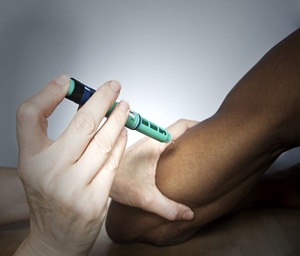
A person with diabetes being injected with insulin to regulate their blood carbohydrate levels.
Insulin is a hormone made by an organ located behind the stomach called the pancreas. There are specialised areas within the pancreas called islets of Langerhans (the term insulin comes from the Latin insula that ways isle). The islets of Langerhans are fabricated up of unlike type of cells that make hormones, the commonest ones are the beta cells, which produce insulin.
Insulin is and so released from the pancreas into the bloodstream so that it can reach different parts of the body. Insulin has many effects merely mainly it controls how the body uses carbohydrates institute in sure types of food. Carbohydrates are cleaved down past the human body to produce a type of sugar called glucose. Glucose is the main energy source used past cells. Insulin allows cells in the muscles, liver and fat (adipose tissue) to take up this glucose and use it as a source of free energy so they can function properly. Without insulin, cells are unable to utilise glucose as fuel and they will get-go malfunctioning. Actress glucose that is not used by the cells volition exist converted and stored every bit fat and then it can be used to provide energy when glucose levels are as well low. In add-on, insulin has several other metabolic furnishings (such as stopping the breakdown of poly peptide and fat).
How is insulin controlled?
The principal actions that insulin has are to let glucose to enter cells to exist used equally energy and to maintain the amount of glucose institute in the bloodstream within normal levels. The release of insulin is tightly regulated in healthy people in order to residual food intake and the metabolic needs of the body. This is a complex process and other hormones found in the gut and pancreas also contribute to this blood glucose regulation. When we eat food, glucose is absorbed from our gut into the bloodstream, raising blood glucose levels. This rise in claret glucose causes insulin to be released from the pancreas then glucose can move inside the cells and be used. As glucose moves inside the cells, the amount of glucose in the bloodstream returns to normal and insulin release slows down. Proteins in nutrient and other hormones produced by the gut in response to nutrient too stimulate insulin release. Hormones released in times of astute stress, such as adrenaline, stop the release of insulin, leading to higher blood glucose levels to assistance cope with the stressful consequence.
Insulin works in tandem with glucagon, another hormone produced by the pancreas. While insulin's role is to lower blood sugar levels if needed, glucagon's role is to heighten blood sugar levels if they fall as well low. Using this system, the body ensures that the blood glucose levels remain within set limits, which allows the body to function properly.
What happens if I have likewise much insulin?
If a person accidentally injects more than insulin than required, e.yard. because they expend more energy or eat less food than they anticipated, cells will take in besides much glucose from the claret. This leads to abnormally low blood glucose levels (called hypoglycaemia). The trunk reacts to hypoglycaemia by releasing stored glucose from the liver in an endeavour to bring the levels back to normal. Low glucose levels in the blood can brand a person experience ill.
The body mounts an initial 'fight back' response to hypoglycaemia through a specialised ready of of nerves called the sympathetic nervous arrangement. This causes palpitations, sweating, hunger, anxiety, tremor and pale complexion that usually warn the person about the depression claret glucose level so this can exist treated. However, if the initial blood glucose level is likewise low or if it is not treated promptly and continues to drib, the encephalon will exist afflicted as well because it depends almost entirely on glucose as a source of free energy to function properly. This tin can cause dizziness, defoliation, fits and fifty-fifty coma in severe cases.
Some drugs used for people with type 2 diabetes, including sulphonylureas (due east.g. gliclazide) and meglitinides (eastward.thou. repaglinide), can also stimulate insulin production within the torso and can also cause hypoglycaemia. The body responds in the same mode as if backlog insulin has been given by injection.
Furthermore, there is a rare tumour called an insulinoma that occurs with an incidence of 1-4 per meg population. Information technology is a tumour of the beta cells in the pancreas. Patients with this type of tumour present with symptoms of hypoglycaemia.
What happens if I accept too piddling insulin?
People with diabetes have problems either making insulin, how that insulin works or both. The chief two types of diabetes are blazon 1 and type two diabetes, although there are other more than uncommon types.
People with type ane diabetes produce very trivial or no insulin at all. This condition is acquired when the beta cells that make insulin have been destroyed by antibodies (these are usually substances released by the trunk to fight against infections), hence they are unable to produce insulin. With besides piddling insulin, the body can no longer move glucose from the blood into the cells, causing high blood glucose levels. If the glucose level is high enough, excess glucose spills into the urine. This drags extra water into the urine causing more frequent urination and thirst. This leads to aridity, which can cause confusion. In addition, with too little insulin, the cells cannot take in glucose for energy and other sources of free energy (such as fat and muscle) are needed to provide this energy. This makes the body tired and can cause weight loss. If this continues, patients can get very ill. This is because the trunk attempts to make new energy from fatty and causes acids to be produced as waste products. Ultimately, this can pb to coma and death if medical attention is not sought. People with type 1 diabetes will need to inject insulin in order to survive.
Type 2 diabetes can be caused past two principal factors and its severity will depend on how advanced it is. Firstly, the patient's beta cells may take issues manufacturing insulin, so although some insulin is produced, it is non enough for the trunk's needs. Secondly, the available insulin doesn't work properly because the areas in the cell where insulin acts, called insulin receptors, become insensitive and end responding to the insulin in the bloodstream. These receptors appear to malfunction more than in people who carry excessive amount of weight. Some people with type two diabetes might initially experience very few symptoms and the raised blood glucose is merely picked up when a routine blood test is arranged for some other reason; other people might experience symptoms similar to those seen in patients with type 1 diabetes (thirst, frequent urination, aridity, hunger, fatigue and weight loss). Some patients with type 2 diabetes tin can control their symptoms past improving their nutrition and/or losing weight, some will need tablets, and others will need to inject insulin to improve blood glucose levels. Meet the commodity on diabetes mellitus for more than data.
Last reviewed: Mar 2018
Source: https://www.yourhormones.info/hormones/insulin/
0 Response to "what happens if the body is unable to maintain its blood glucose levels?"
إرسال تعليق